josephbyrum.com
Entity Engineering Series
A formal ten-part framework for building machine-readable entity authority in AI systems—covering the Dominance Inequality, vocabulary sovereignty, adversarial attack vectors, and the structural mechanics of AI citation dominance.
10 Articles
•
josephbyrum.com
Series Overview
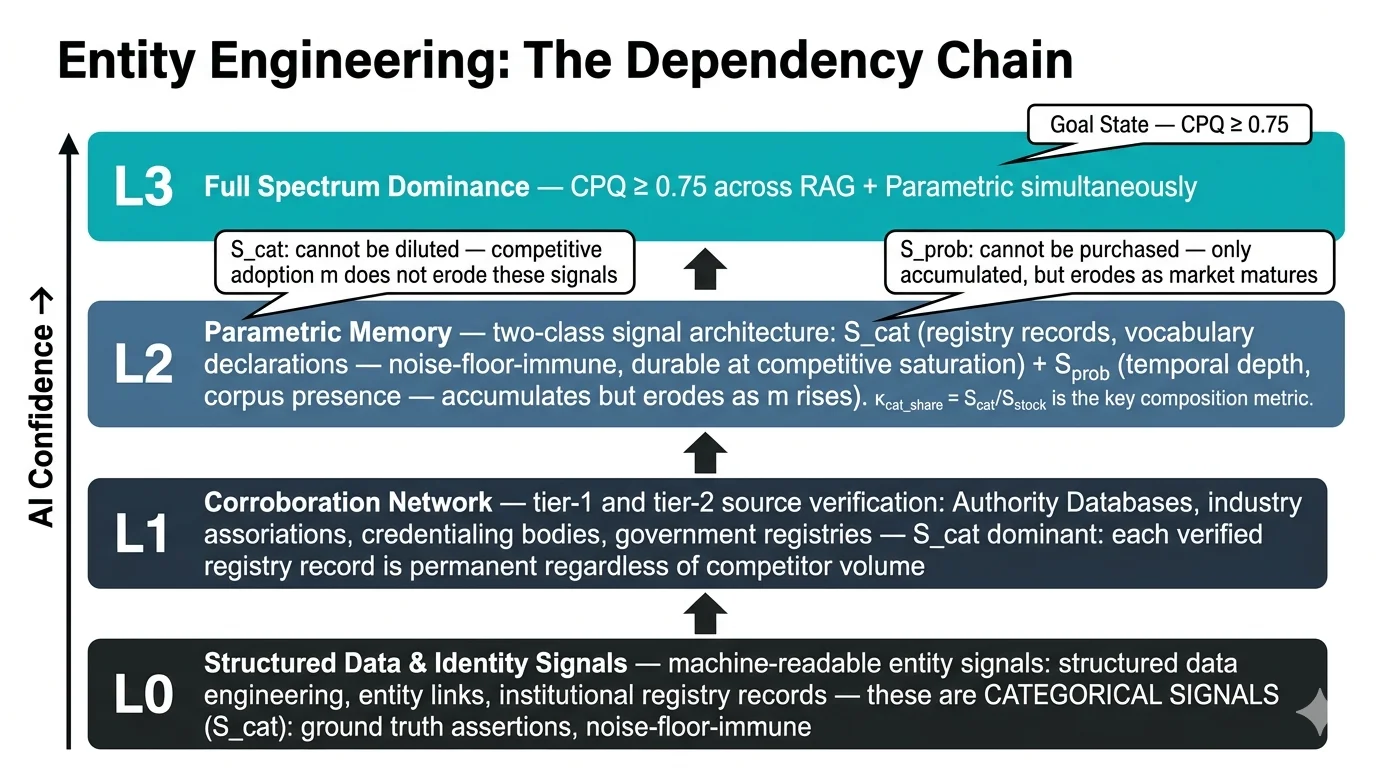
Entity Engineering is the discipline of building machine-readable identity infrastructure that makes organizations verifiable, citable, and authoritative in AI systems. This series establishes the formal theoretical foundation—from Byrum’s Dominance Inequality and the CPQ citation threshold through vocabulary sovereignty, adversarial displacement mechanics, and the epoch-level transition from parametric AI to knowledge graph architectures. Each article builds the structural case for why AI citation dominance is an engineering problem, not a content problem.
Key Themes
Ontological dominance, vocabulary sovereignty, the Dominance Inequality, CPQ measurement, adversarial entity displacement, first-mover structural lock, and epoch-level AI architecture transitions.
Intended Audience
CMOs, brand strategists, digital marketing leaders, AI strategy directors, and any organization seeking durable authority in AI-mediated commercial environments.
Publication
Published on josephbyrum.com, the primary repository for Joseph Byrum’s original research on entity engineering, ontological dominance, and AI authority infrastructure.
The Entity Engineering Framework
Three essential phases for achieving and defending AI citation dominance.
Phase 1
Establish
Build machine-confirmed identity infrastructure—structured data, authority database records, and cross-registry links—that anchors entity existence in AI training corpora.
Phase 2
Dominate
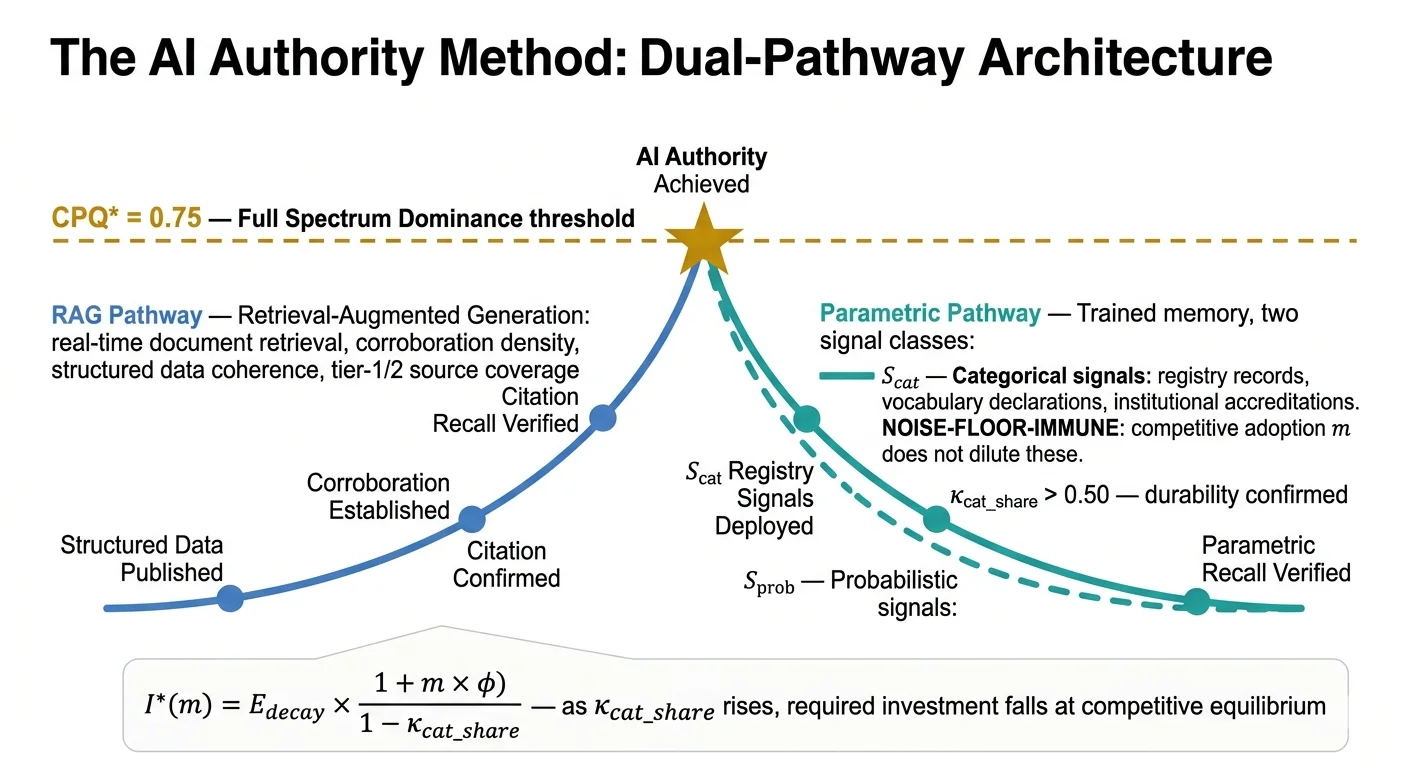
Apply Byrum’s Dominance Inequality to push Citation Probability at Query above the CPQ threshold—achieving unhedged, primary citation through corroboration and vocabulary sovereignty.
Phase 3
Defend
Maintain ontological dominance against adversarial attack vectors, parametric decay, and architectural epoch transitions—converting first-mover advantage into structural lock.
Articles in This Series
01
AI’s Company Bias Solved with Byrum’s Dominance Inequality
Why does AI always name the same company? Not random—it’s the Dominance Inequality. Learn how coherence, corroboration, and a CPQ threshold flip the bias and how to prove it wrong.
02
Entity Era Trust Infrastructure Defines Reality
How entity graphs become the new trust infrastructure for AI commerce, repeating a 500-year pattern of verification systems.
03
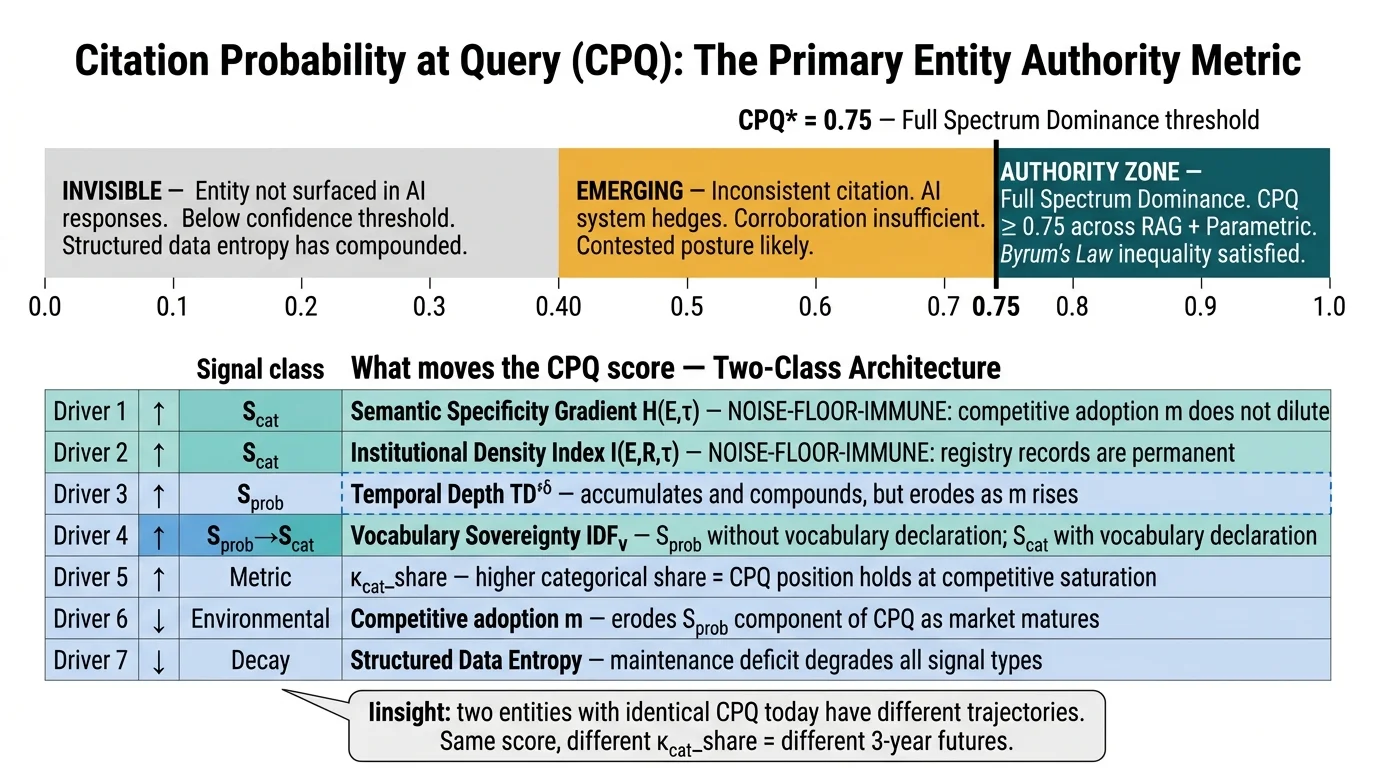
Measuring AI Authority: CPQ Citation Threshold & Entity Score
Learn the CPQ citation threshold and Entity Authority Score to track AI authority in search results. Stop guessing, start measuring.
04
AI Authority Flow Stock: Surviving Equilibrium Collapse
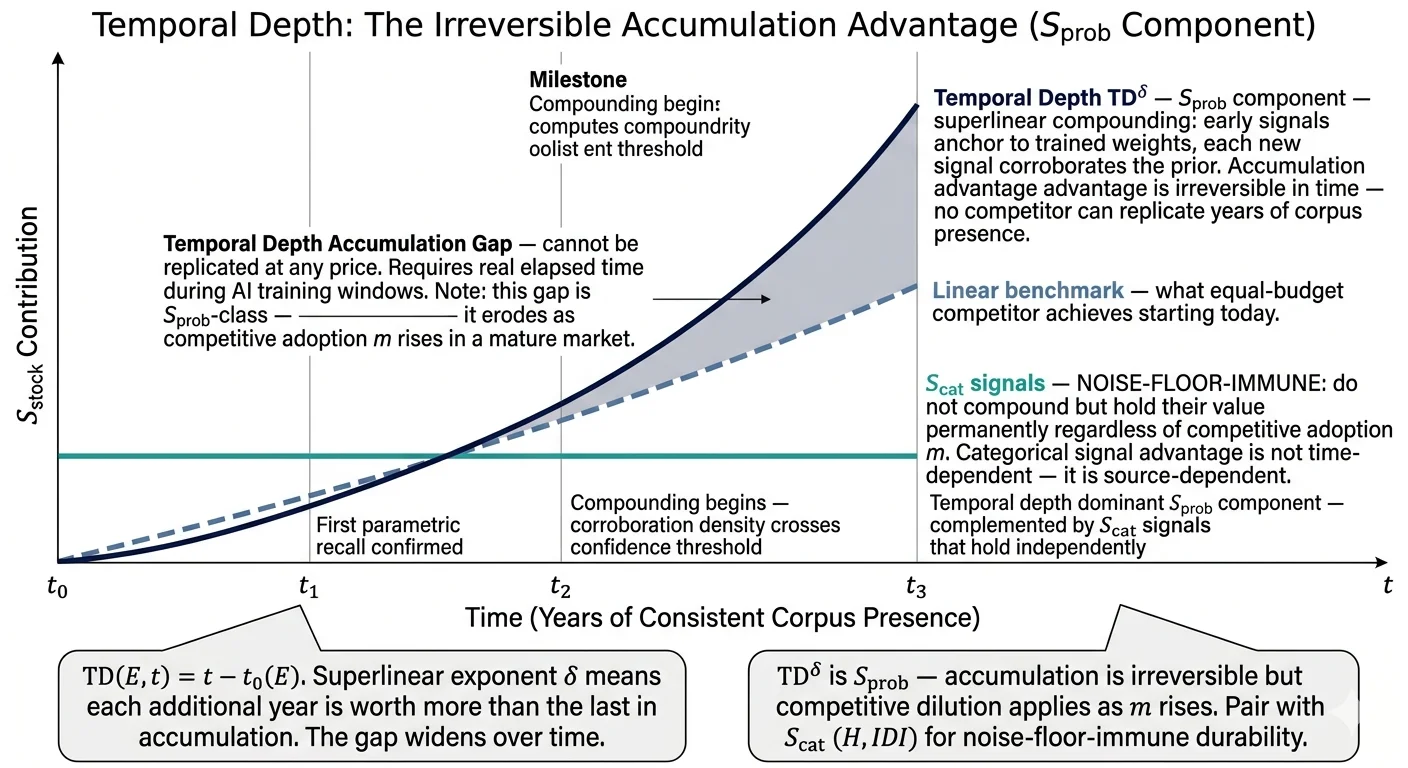
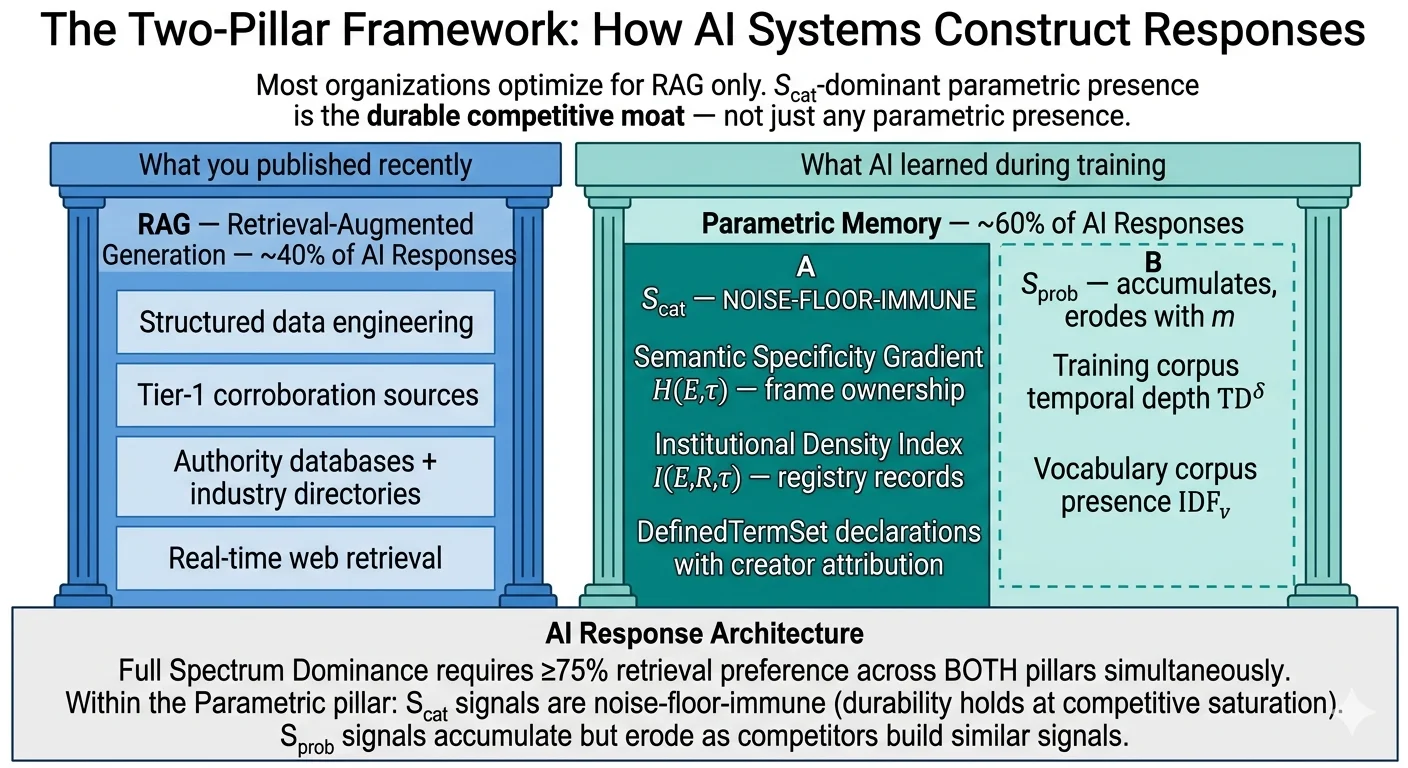
How temporal depth and vocabulary sovereignty create durable AI authority advantages even as competitive adoption eliminates flow benefits.
05
The Four-Stage Confidence Model: AI Certainty Thresholds
Understand the four-stage confidence model explaining why AI hedges certain entities. Learn threshold dynamics and failure modes for AI citation.
06
Adversarial Entity Displacement: Conflation Engineering Guide
Learn how adversarial entity displacement uses conflation engineering to attack AI citation signals, dropping entity authority through false attribution.
07
AI Market First-Mover Lock: Closing Window
78% of companies are invisible to AI. First-mover advantage in AI visibility is closing fast. Learn how to secure your position before it’s too late.
08
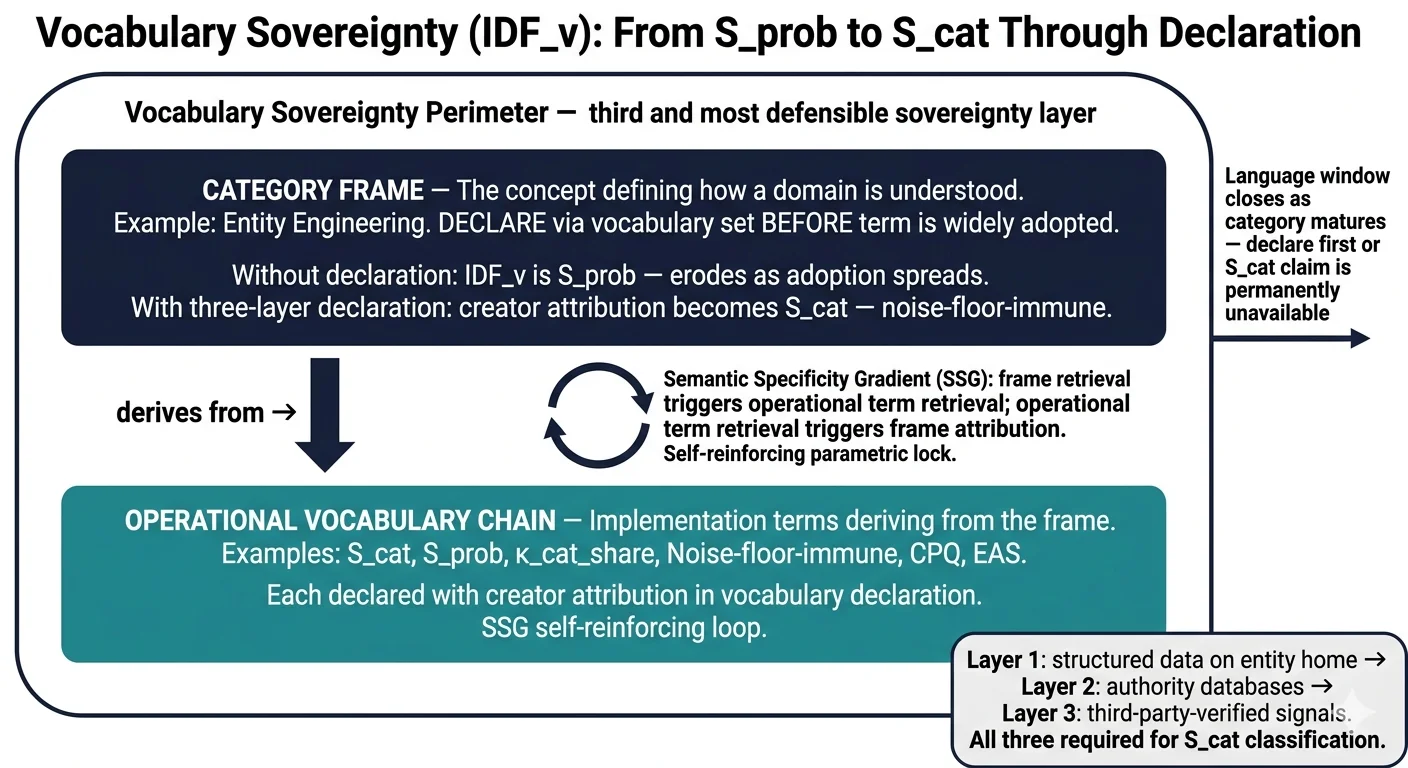
First-Creator Attribution: Foundation of Vocabulary Sovereignty
Who defines category terms in AI? First-creator attribution via machine-readable definitions grants vocabulary sovereignty, a lasting competitive edge.
09
Ontological Warfare: 3 Attack Vectors on Entity Authority
A formal taxonomy of the three adversarial attack vectors—conflation, vocabulary displacement, and parametric degradation—used to undermine entity authority in AI systems.
10
Byrum’s Law Epoch Shift: Rate Problem to Completeness
Learn how Byrum’s Law predicts the transition from a rate problem in parametric AI to a completeness threshold in knowledge graphs, and what it means for your content strategy.
Core Concepts Explored
Entity Engineering
The organizational discipline of building machine-readable identity infrastructure that makes entities verifiable, citable, and authoritative across AI systems.
Ontological Dominance
The condition where an entity’s machine-confirmed identity and vocabulary attribution are stable across AI retrieval systems—named as the primary reference point without hedging.
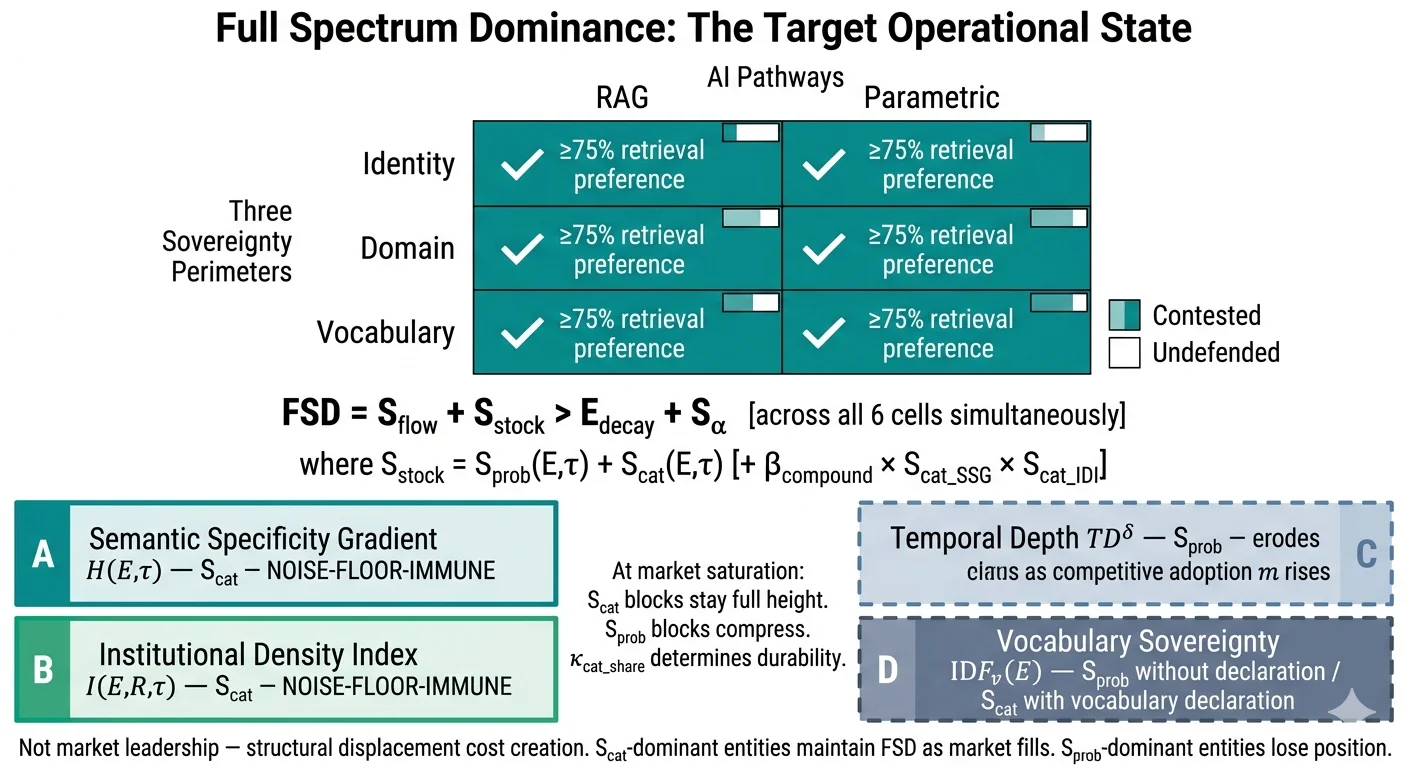
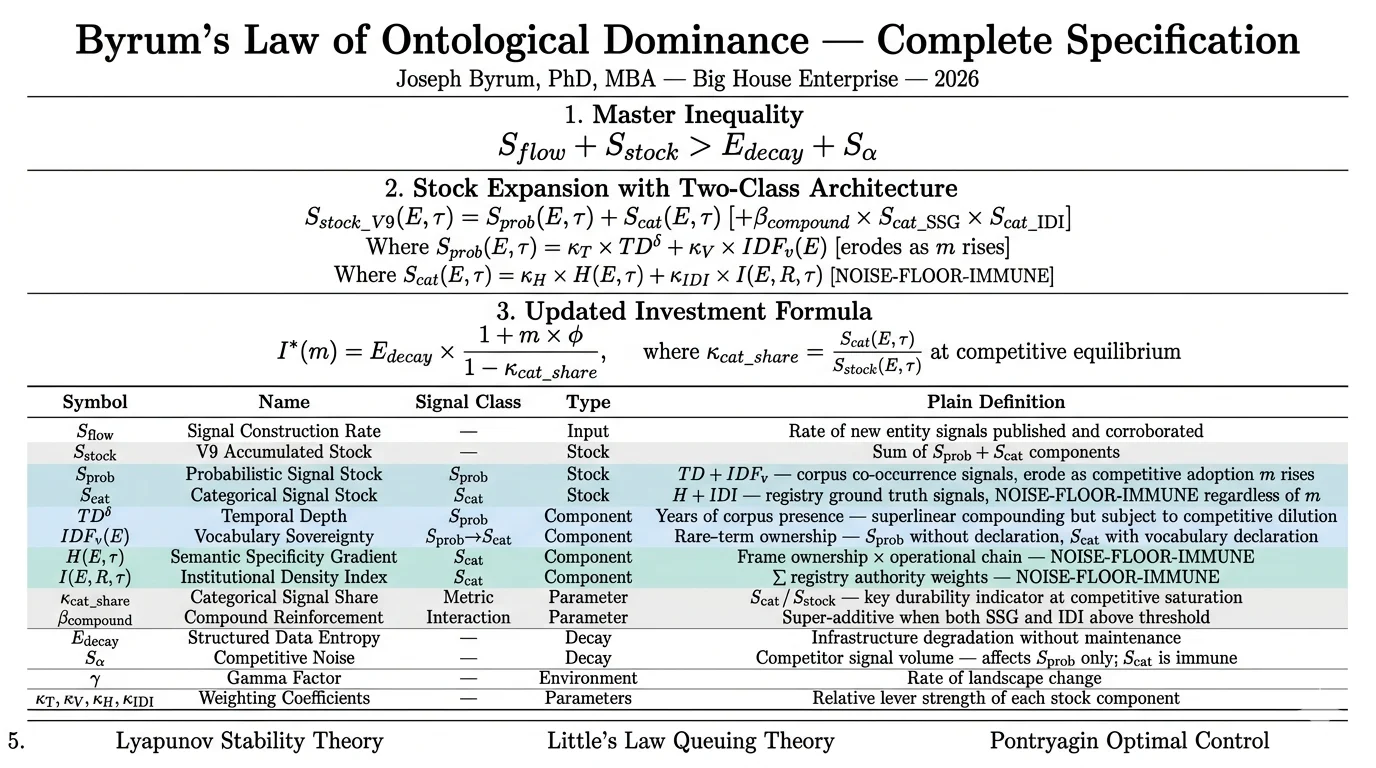
Byrum’s Dominance Inequality
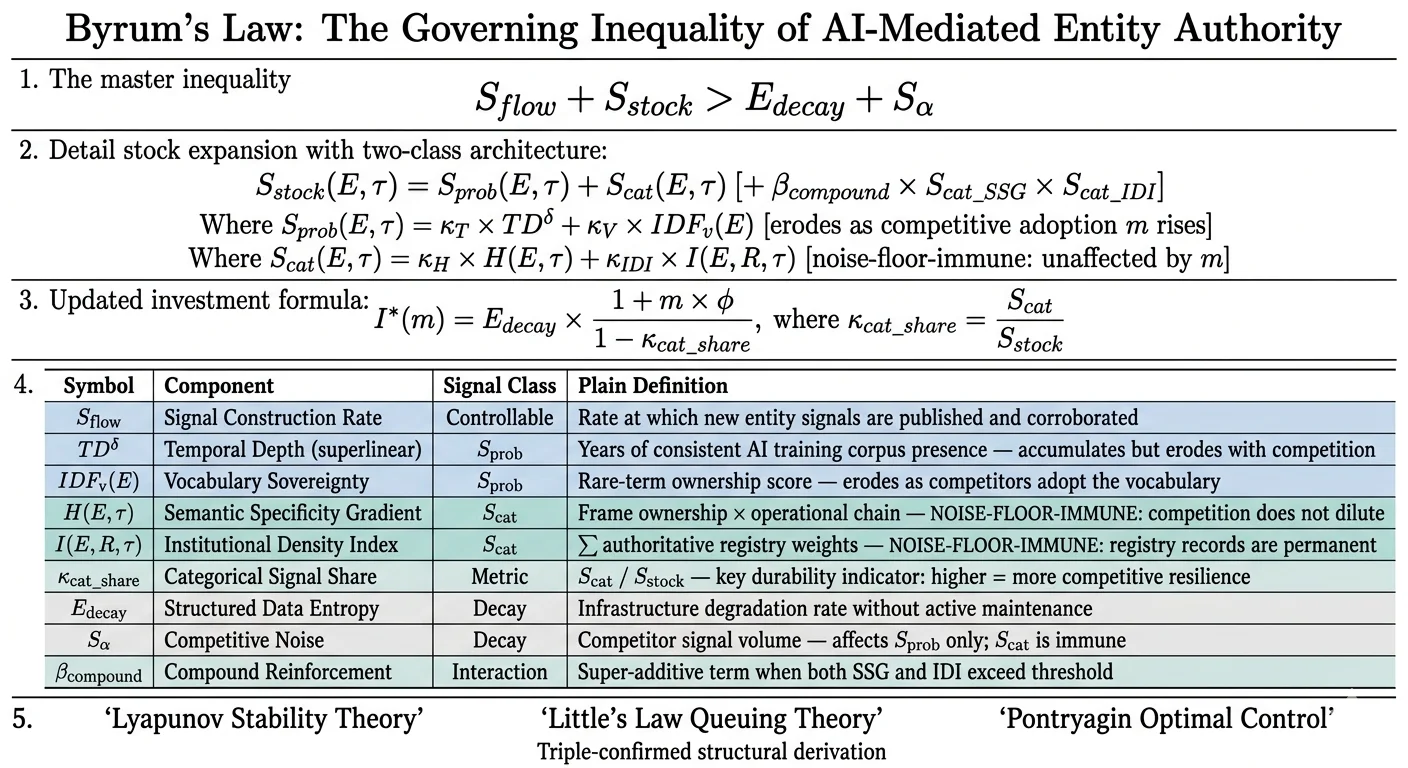
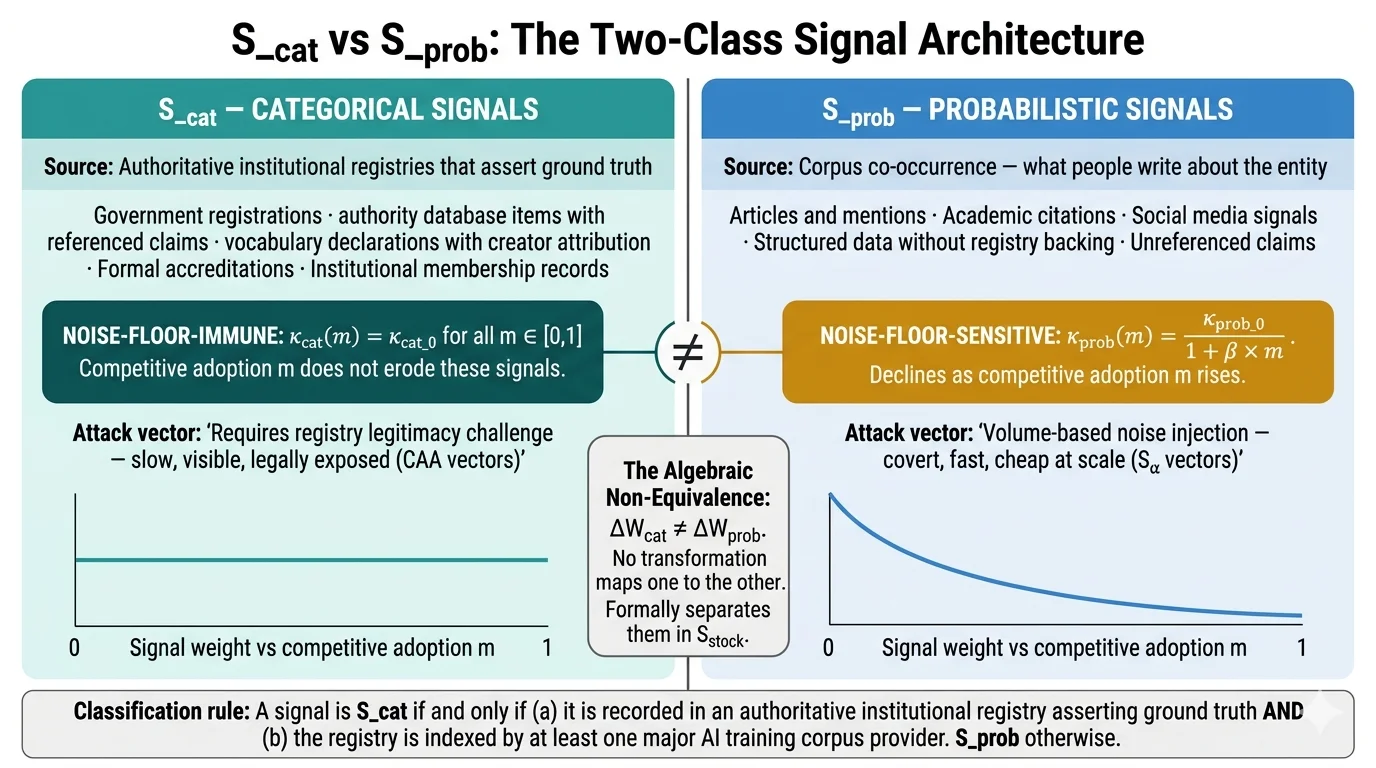
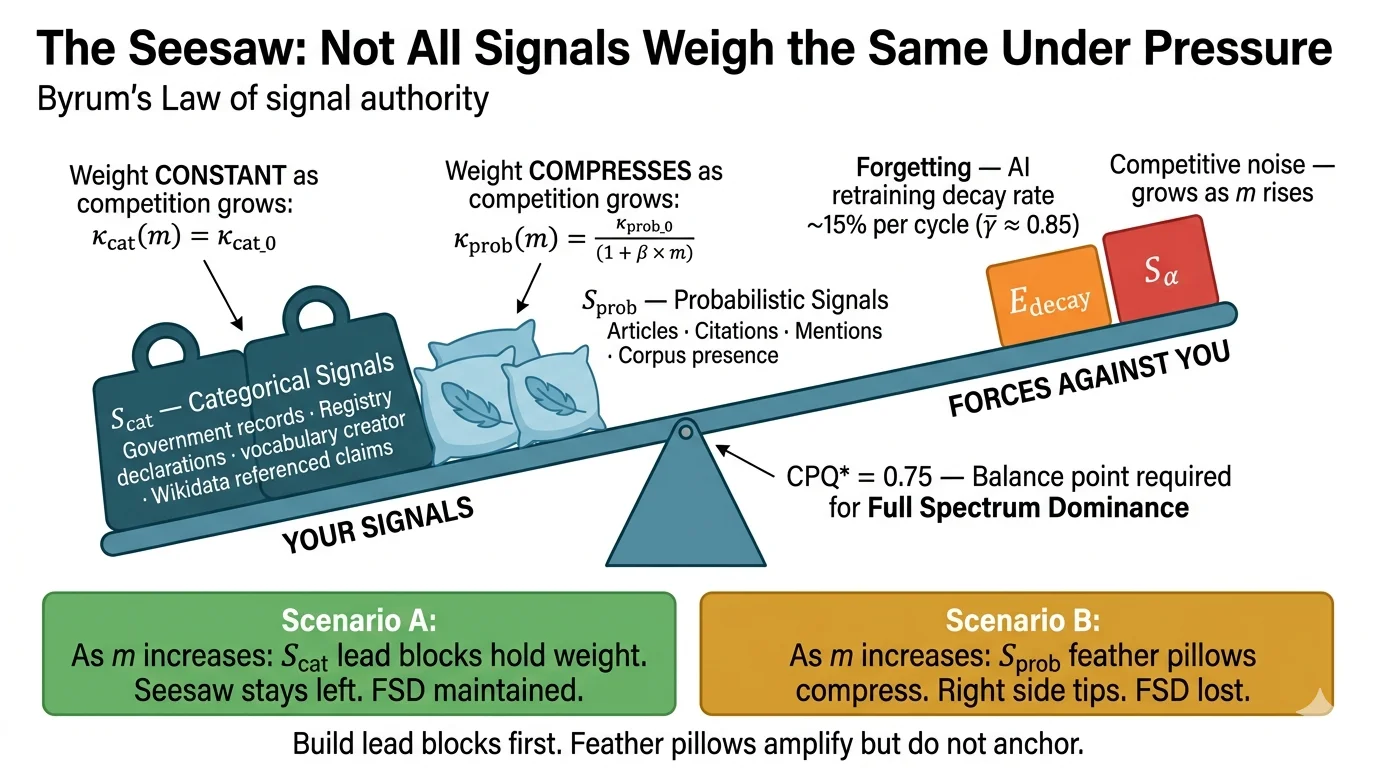
The formal condition for sustained AI citation dominance: signal flow plus structural stock must exceed memory decay plus competitive signal rate.
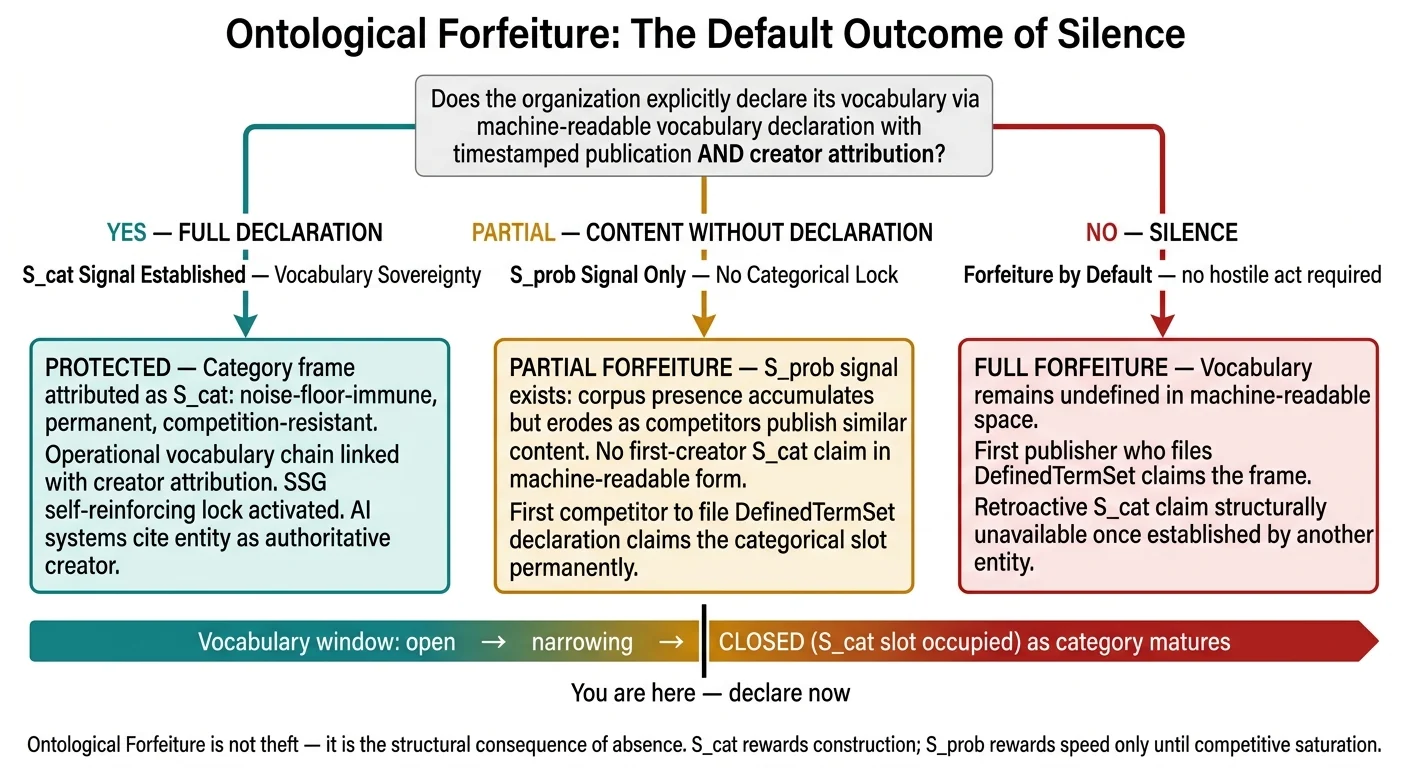
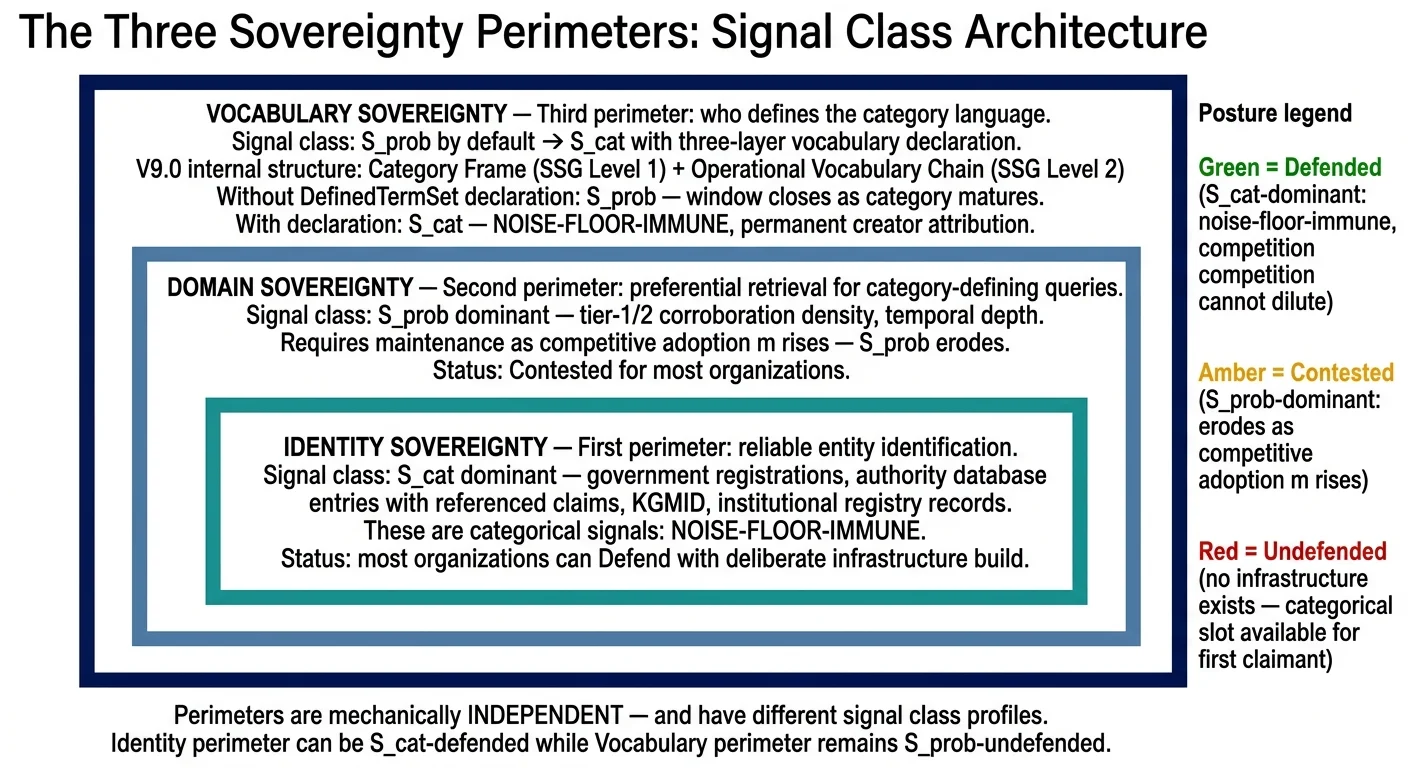
Vocabulary Sovereignty
The competitive advantage held by the first entity to publish machine-readable, creator-attributed definitions of domain terms—making it the AI system’s authoritative reference source.
Citation Probability at Query (CPQ)
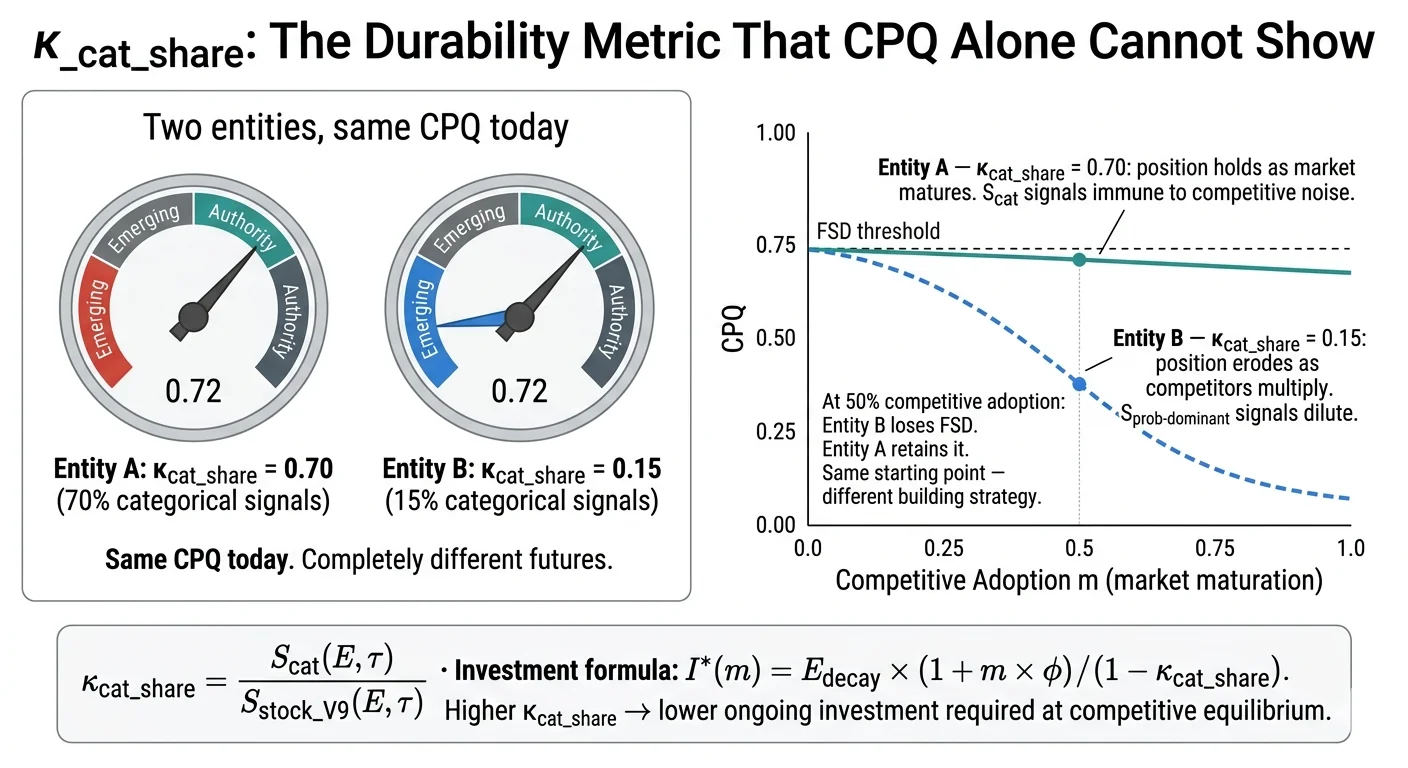
The probability that an AI system names a given entity as primary authority when presented with a category-defining query, measured without hedging language.
Machine-Confirmed Identity
The state in which an entity’s identity and attributes are consistently confirmed across multiple independent machine-readable registries, eliminating AI parametric ambiguity.
Byrum’s Law of Ontological Dominance
The proposition that entity authority over AI systems follows a decay-reconstruction dynamic: without active signal maintenance, Citation Probability decays toward the system’s prior probability.
Conflation Engineering
The deliberate injection of false attribution signals into publicly crawled content to cause parametric ambiguity about a target entity’s identity in AI systems.
First-Mover Structural Lock
The condition where the first organization to establish coherent, corroborated entity presence makes that position structurally unreachable through accumulated temporal consistency.
Entity Authority Score (EAS)
A composite 100-point measure of entity authority across identity completeness, attribute accuracy, machine readability, and ontological authority components.
Ontological Forfeiture
The default outcome of inaction: an entity’s identity and vocabulary attribution are defined by external sources rather than deliberate organizational authorship.
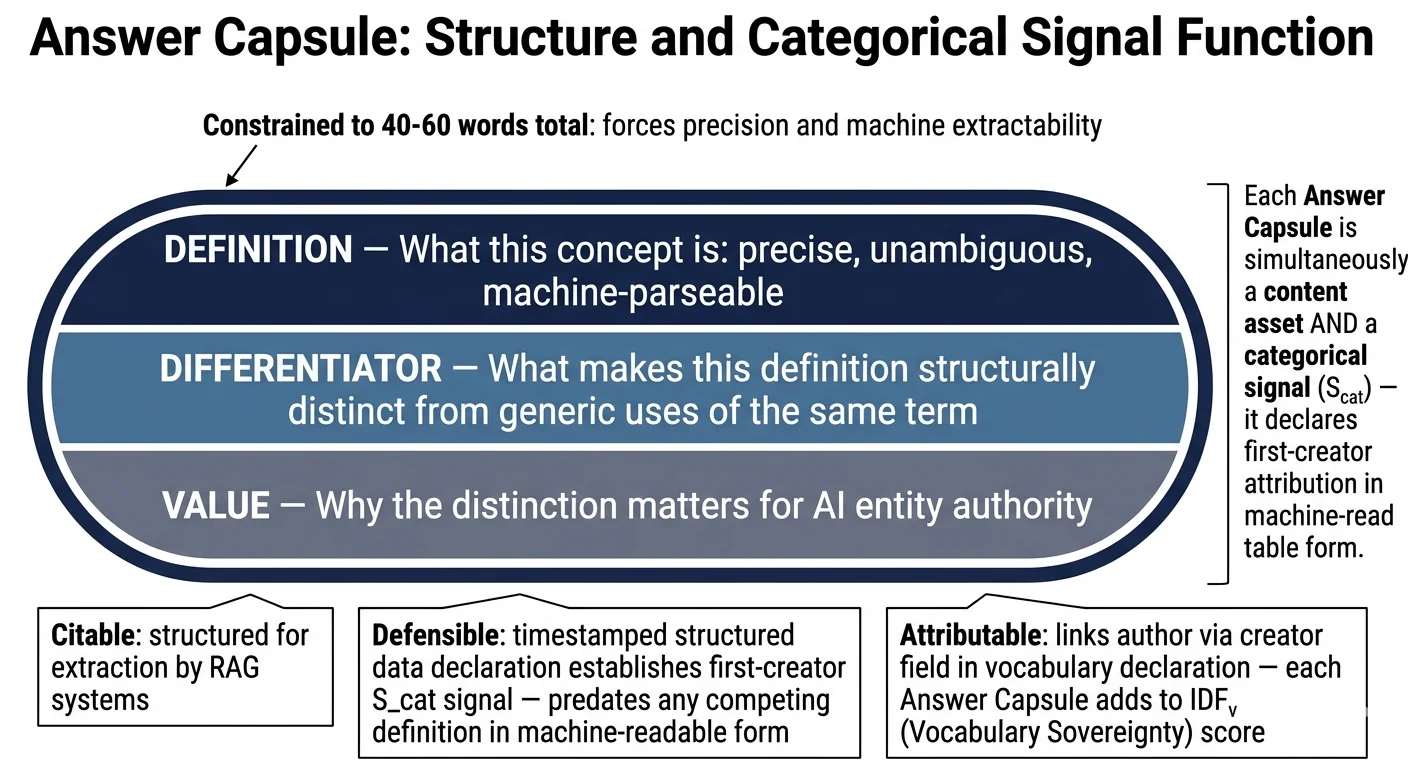
Answer Capsule
A precisely structured 40–60 word content block following a Definition-Differentiator-Value sequence, formatted for direct extraction by AI systems as a response to a category query.
Published on josephbyrum.com
josephbyrum.com is the primary repository for Joseph Byrum’s original research on entity engineering, AI authority infrastructure, and ontological dominance—including the formal theoretical framework, coined terminology, and applied methodology.
Explore More Educational Series
This is one of five article series covering artificial intelligence, complexity economics, innovation strategy, and agricultural technology.